






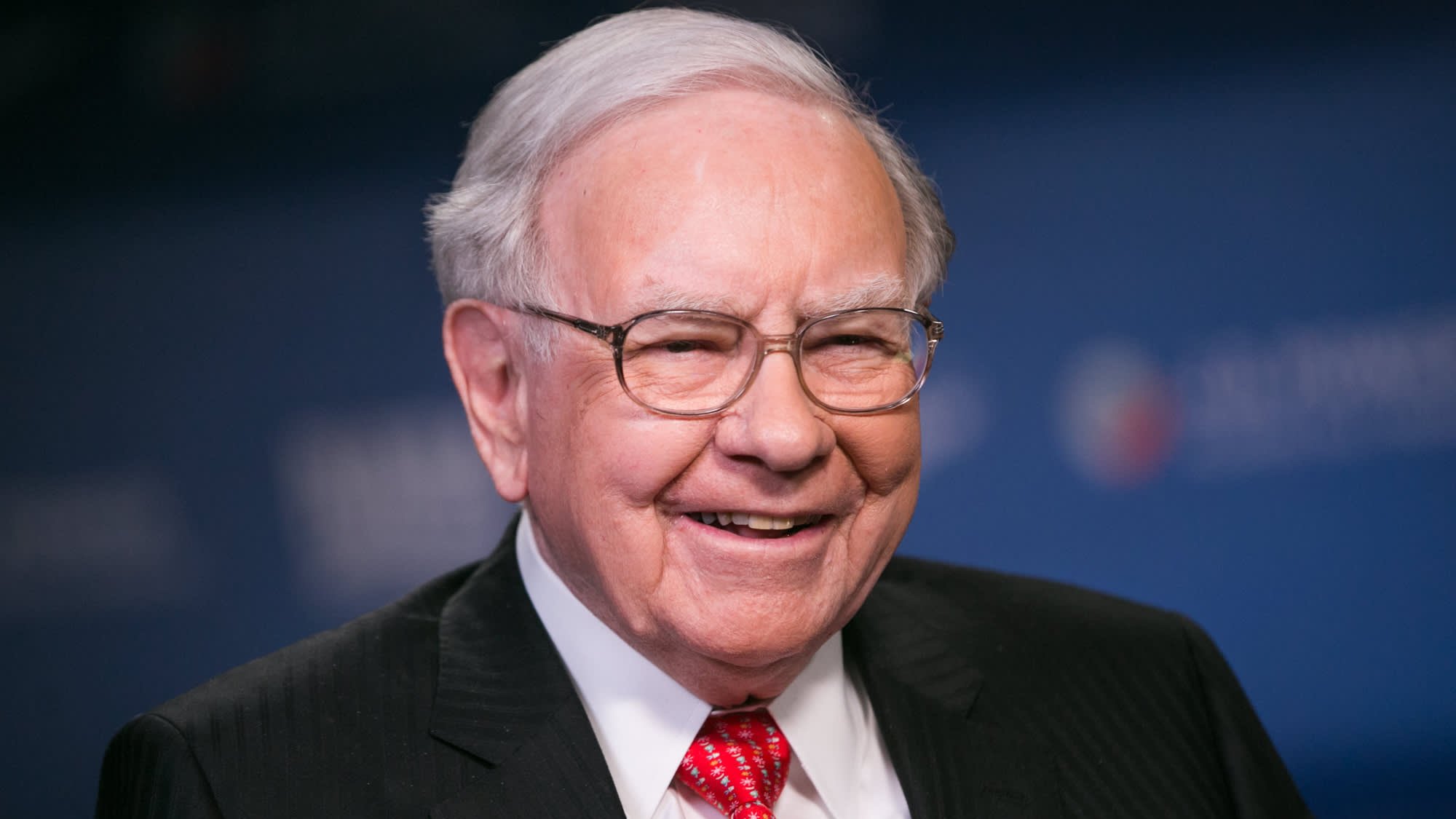
Berkshire Hathaway today announced a series of significant leadership appointments across its non-insurance, insurance, and corporate divisions, signaling a strategic transition as the conglomerate prepares for the retirement of its long-serving CFO and the upcoming CEO succession.
The most notable is the departure of Todd Combs, who served as one of the conglomerate’s two investment managers and, more recently, as the CEO of its insurance subsidiary, GEICO.
Todd Combs leaves Berkshire to join JPMorgan Chase
Effective January 2026, Combs will join JPMorgan Chase to head the $10 billion Strategic Investment Group within the firm’s new Security and Resiliency Initiative (SRI). This group is tasked with making direct equity investments primarily targeting sectors critical to U.S. national security and economic resilience, including defense, aerospace, healthcare, and energy.
Combs, who has been serving on JPMorgan’s board, will also serve as a Special Advisor to Chairman and CEO Jamie Dimon and the firm’s Operating Committee on specific strategic issues.
In Berkshire’s release announcing the leadership changes, Buffett said, Combs “has resigned to accept an interesting and important job at JPMorgan.” The nonagenarian added, “Todd made many great hires at GEICO and broadened its horizons. JPMorgan, as usually is the case, has made a good decision.”
Meanwhile, the insurance division, led by Vice Chairman Ajit Jain, is undergoing a notable transition with the departure of the GEICO CEO.
Nancy L. Pierce has been appointed CEO of GEICO, effective immediately. Ms. Pierce is a veteran of the company, having served since 1986 and most recently holding the position of Chief Operating Officer.
“Nancy knows the business inside and out. She’s practical, decisive, and focused on results. I have full confidence in her ability to move GEICO forward,” said Ajit Jain.
Leadership transitions in non-insurance businesses
In the non-insurance business, Adam M. Johnson has been appointed President of the Consumer Products, Service, and Retailing businesses, effective immediately. Mr. Johnson will continue to serve as the CEO of NetJets, a role he has held for 10 years as part of his nearly three decades with the company. In his new capacity, he will support the CEOs of Berkshire’s 32 diverse consumer businesses, which include prominent brands like Dairy Queen and See’s Candies.
Commenting on the appointment, Berkshire’s upcoming CEO Greg Abel stated, “Adam is an accomplished leader with a proven ability to deliver long-term shareholder value. In his new role, he will support the outstanding CEOs of our 32 consumer products, service, and retailing businesses, and uphold Berkshire’s culture and values.”
The remainder of the non-insurance businesses, including BNSF Railway, Berkshire Hathaway Energy, and industrial/building products, will remain under the direct oversight of Greg Abel.
Berkshire announces corporate appointments
Berkshire also announced some corporate announcements as part of the wide-ranging leadership changes. Charles C. Chang will succeed Marc D. Hamburg as Senior Vice President and Chief Financial Officer, effective June 1, 2026. Hamburg is slated to retire on June 1, 2027, after 40 years of service, and will work with Chang on a year-long transition. Chang currently serves as CFO of Berkshire Hathaway Energy and has extensive experience in financial reporting and mergers and acquisitions.
Michael J. O’Sullivan has been appointed Senior Vice President and General Counsel, effective January 1, 2026. O’Sullivan joins from Snap Inc., and his appointment marks a new direction for Berkshire Hathaway, which has historically relied on external legal counsel for corporate matters.
These appointments are the latest steps in the long-planned succession strategy for the $1.1 trillion conglomerate as Warren Buffett, the iconic Chairman, prepares to step down as CEO at the end of 2025. The changes signal a move to solidify operational leadership across the vast empire, ensuring that experienced, internal figures are in place to maintain the company’s performance and culture under the incoming chief, Greg Abel.
Berkshire has been on a share-selling spree
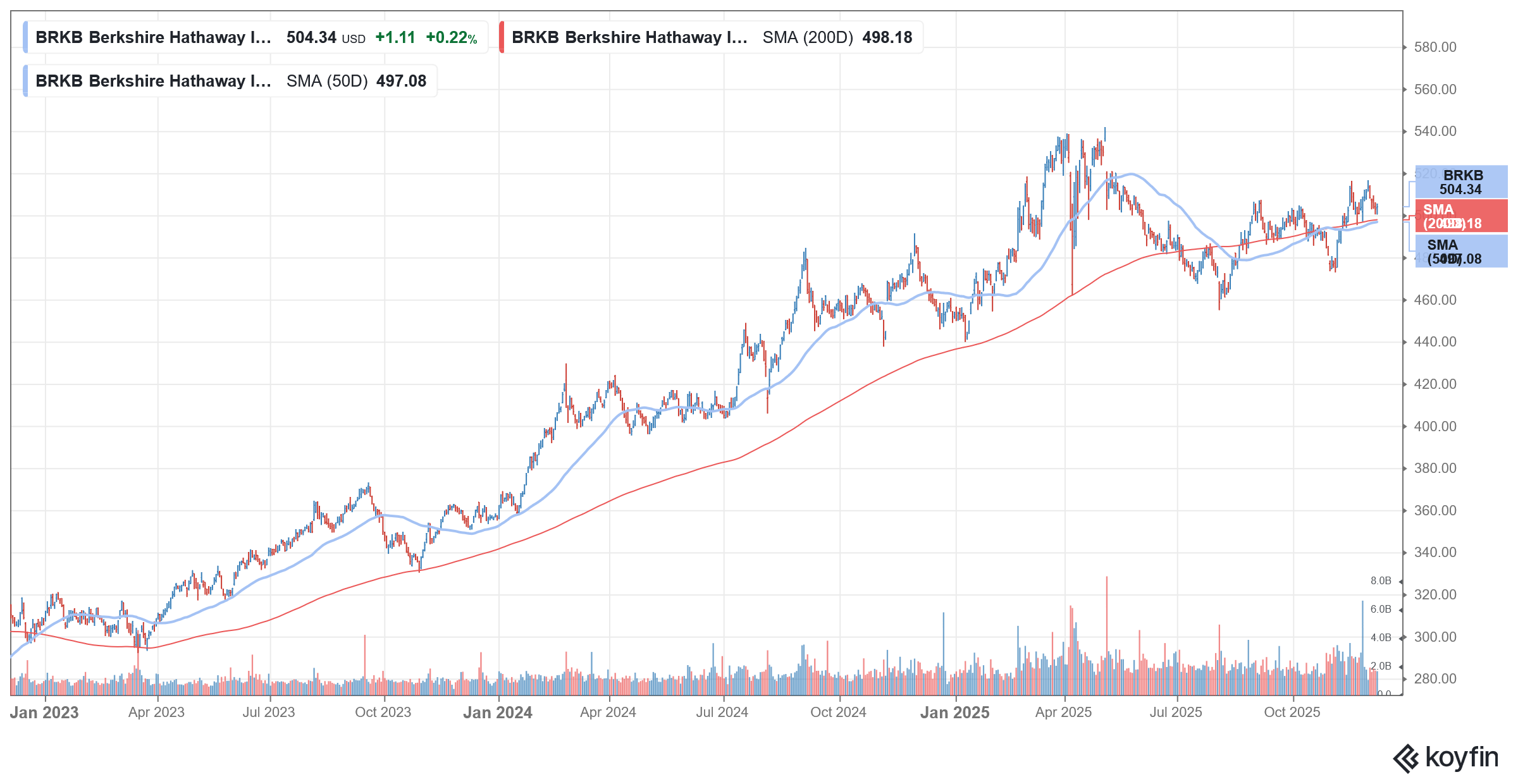
Berkshire net sold shares (more shares sold than bought) worth $6.1 billion in Q3 and ended the quarter with a record cash pile of $381.7 billion. It was the 12th consecutive quarter when the conglomerate sold more shares than it bought, which, coupled with the operating cash flows, has helped catapult its cash pile to record highs.
To gauge the size of the company’s cash pile, consider the fact that Berkshire now owns over 5% of all outstanding US Treasury bills.
Berkshire bought Alphabet shares in Q3
Meanwhile, in what came as a major surprise, Berkshire disclosed a new, substantial position in Alphabet’s Class A shares, valued at approximately $4.3 billion in Q3. This marks a notable foray into a big-tech name and is one of the largest buys of the quarter. Notably, Buffett previously admitted to missing out on names like Amazon and Google. While we don’t know whether buying Alphabet was Buffett’s decision, it is rare for the conglomerate to invest in tech stocks.
Apart from Alphabet, Berkshire added significantly to its position in the global insurance company Chubb, increasing its stake by about 15.9%. This move reinforces the company’s confidence in the insurance sector, a core part of Berkshire’s own business. Berkshire also added to its existing positions in Domino’s Pizza (DPZ), SiriusXM, and Lamar Advertising.
Buffett further trimmed Apple shares in Q3
The company trimmed its massive stake in Apple by nearly 15% or nearly 41.8 million shares, and held around 238 million shares at the end of September
Notably, Berkshire sold the bulk of its Apple stake last year and held 300 million shares at the end of the year. The round figure raised hopes that the “Oracle of Omaha” was done with selling Apple shares, and the perception gained traction after Berkshire left Apple holdings unchanged in Q1. However, Buffett resumed selling Apple shares in Q2, and it only intensified in Q3.
At Berkshire Hathaway’s last year’s annual meeting, Buffett alluded that the decision to sell Apple shares was based on tax considerations, especially on hopes that taxes might need to rise to fund the burgeoning US fiscal deficit.
For context, Buffett started investing in Apple way back in 2016 and gradually built the stake into the largest holding in Berkshire’s portfolio of publicly traded securities. The “Oracle of Omaha,” as Buffett is popularly known as has kept adding to Apple shares until the third quarter of 2018.
Meanwhile, despite the significant sale, Apple remains Berkshire’s single largest stock holding, dominating the portfolio.
 Share
Share

Mohit Oberoi

Question & Answers (0)