






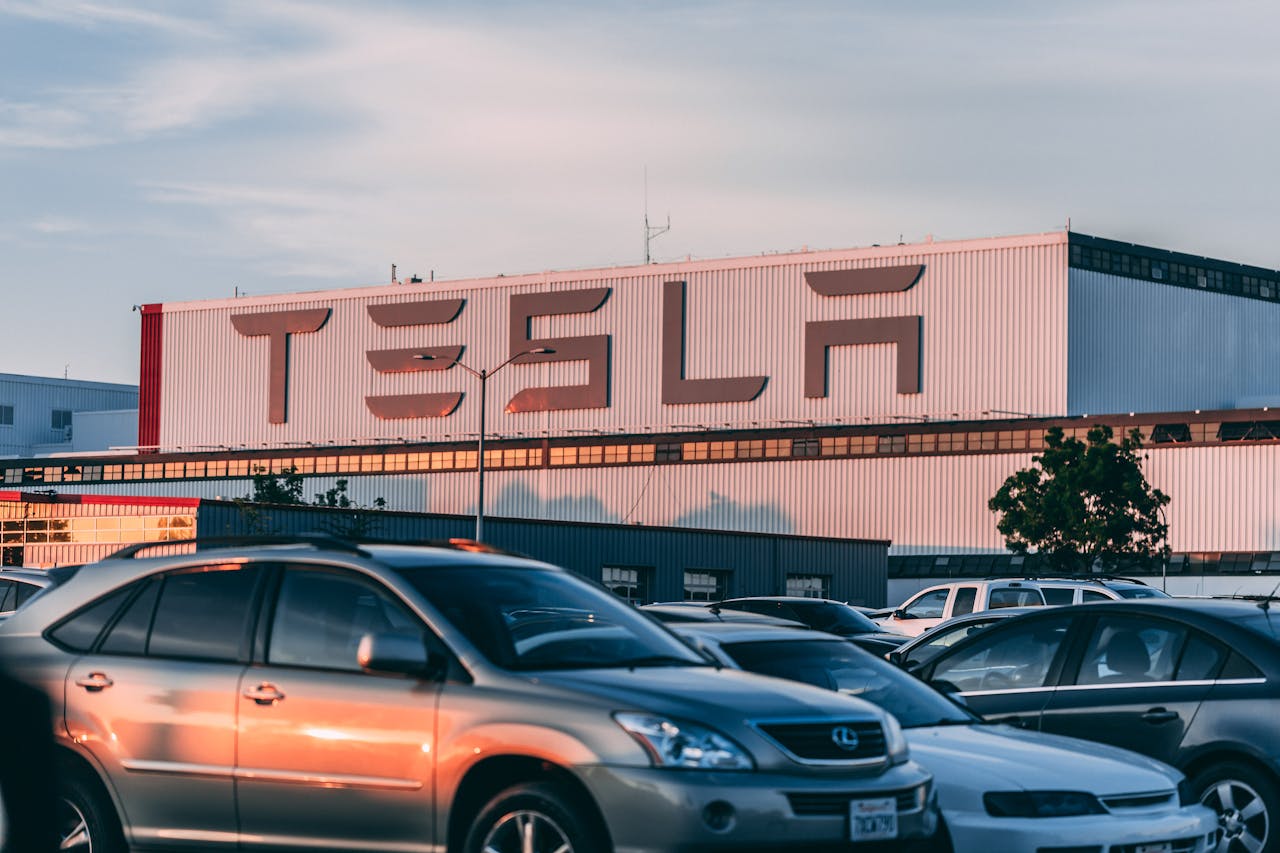
BYD’s registrations in Europe soared 221.8% year-over-year to 21,133 units in November, while Tesla saw a 11.8% decline. The Elon Musk-run company sold 22,801 units in Europe last month and 203,382 units in the first 11 months of the year, which were both ahead of BYD’s, but the Chinese new energy vehicle (NEV) giant is fast catching up and has outsold Tesla for a few months this year.
In major markets like Germany, Tesla registrations plummeted by 64.2% in November, whereas BYD set a new monthly record in the country.
Tesla saw a dip in European market share
As Tesla’s market share has shrunk, BYD’s has grown, moving from a marginal player to a significant competitor with a noticeable increase in its overall EU market penetration. Unlike Tesla, which relies heavily on the Model 3 and Model Y, BYD offers a more extensive lineup that includes pure electric and popular Plug-in Hybrid Electric Vehicles (PHEV). This diversity appeals to buyers in regions where charging infrastructure is still developing or where consumers prefer the flexibility of a hybrid.
Notably, while the Elon Musk-run company has been in Europe for quite some time now and also has one of its Gigafactories in Berlin, BYD entered the region only in late 2022. Moreover, BYD cars face tariffs in the EU, while the cars built by Tesla at its Germany Gigafactory are exempt from these tariffs.
Tesla is facing a backlash in Europe
The decline for Tesla isn’t just a product of competition; it also appears to be cultural. Reports suggest that CEO Elon Musk’s vocal political activities throughout 2025 have alienated a segment of the traditional European EV buyer base. Tesla is facing a backlash in Europe, and 10 drivers in Paris filed a lawsuit against the company, alleging that the perception of its cars becoming political symbols “prevents them from fully enjoying their car.”
Patrick Klugman, one of the lawyers working on the case, told Agence France-Presse, “The situation is both unexpected and impossible for French Tesla owners.” He added, “We believe that Mr Musk owes these buyers the peaceful possession of the thing sold.”
Chinese EV companies are giving Tesla a tough fight in Europe
Other Chinese EV companies are also expanding in Europe, and Xpeng Motors has partnered with Magna Steyr for local production of its G6 and G9 electric SUVs in Austria. Local production would help Chinese EV companies avoid the tariffs they are otherwise subject to in the EU on vehicles imported from China.
Xpeng has been aggressively expanding its global manufacturing footprint and recently signed a definitive agreement with EP Manufacturing Berhad (EPMB) in Malaysia.
EPMB (specifically its subsidiary PEPS-JV) will handle the local assembly of Xpeng Motors’ vehicles at its plant in Pegoh, Malacca. The JV plans to begin local assembly of Xpeng’s G6 SUV by March 2026 and XP MPV by May.
Malaysia is not just a target for domestic sales; it will serve as the regional export hub for markets across ASEAN and potentially other global regions. The move is timed to capitalize on Malaysian government incentives, which offer tax exemptions for locally assembled (CKD) EVs until the end of 2027, two years longer than the incentives for fully imported (CBU) vehicles.
Tesla launched low-cost models in Europe
Meanwhile, Tesla has intensified its strategy to counter a significant slump in European demand and launched a new, more affordable version of its Model 3 sedan across key markets earlier this month. This move, which follows the introduction of a lower-priced Model Y variant in October, aims to defend the company’s market share against rising competition from both established European automakers and BYD.
To achieve this lower price point and maintain core battery range (rated over 500 km WLTP), Tesla has had to “de-content” the vehicle by removing several premium features standard in its higher trims. These compromises include:
- Interior Changes: Replacing the full synthetic leather seats with partially textile seats, removing the 8-inch rear-seat touchscreen, and eliminating heated rear seats
- Acoustics & Comfort: Downgrading the audio system from nine to seven speakers and removing power adjustment for the steering wheel
- Exterior: Replacing alloy wheels with steel wheels featuring plastic aero covers, a visible cost-saving measure
While Tesla’s new trim is designed to appeal to budget-conscious buyers and is priced below key rivals like the BYD Atto 3, analysts suggest the stripped-down features, particularly on the Model Y equivalent, could make the value proposition challenging.
Chinese EV companies turn to exports amid slowing domestic sales growth
Meanwhile, Chinese EV companies are battling a slowdown in domestic sales growth. Notably, Q3 2025 marked BYD’s first quarterly revenue decline in over five years, which was accompanied by an almost 33% plunge in third-quarter profit. In a clear sign of the mounting challenges, BYD had previously slashed its 2025 sales target by about 16%, from 5.5 million to 4.6 million units. This is the first time in years the company has reined in its ambitions.
In a move that marks the end of a legendary investment chapter, earlier this year Berkshire Hathaway disclosed that it has fully sold its stake in BYD, a holding that grew from a modest initial investment into one of the conglomerate’s most profitable international wagers.
The divestment, which began in 2022, brings to a close a 17-year-long partnership that was a testament to the foresight of the late Charlie Munger, Warren Buffett’s long-time business partner.
BYD is on track to outsell Tesla in 2025
Amid slowing sales growth in China, domestic auto companies have been expanding to global markets, particularly in Europe. BYD exported 128,067 units in November alone, a massive 313.4% increase compared to the same month last year. The company exported 878,498 vehicles in the first 11 months of the year, which is twice what it did during the corresponding period last year. Analysts expect the company’s 2025 exports to hit 1 million.
While it still trails Chery in total Chinese export volume, the gap is narrowing rapidly. Crucially, while Chery’s exports still rely heavily on internal combustion engines, BYD’s exports are comprised entirely of NEVs. Notably, BYD is the world’s biggest seller of NEVs and is on track to become the biggest seller of battery electric vehicles this year, a position Tesla has long held.
 Share
Share

Mohit Oberoi

Question & Answers (0)