






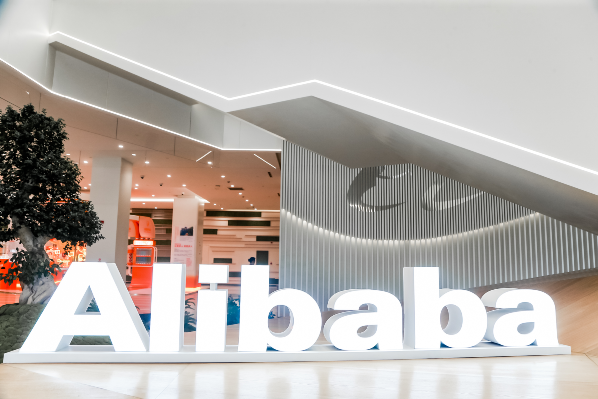
Alibaba has teamed up with China’s state-owned nuclear titan to secure the massive energy reserves required for the next generation of artificial intelligence (AI).
Alibaba established a joint venture with China National Nuclear Power Co. (CNNP), a subsidiary of the China National Nuclear Corporation (CNNC). The new entity, registered as Zhonghe (Xiangshan) Nuclear Energy Co., Ltd., is based in Ningbo, Zhejiang province, near Alibaba’s global headquarters in Hangzhou.
Alibaba partners with nuclear energy firm
While the exact technical breakdown (such as the use of Small Modular Reactors vs. traditional grid-scale power) remains confidential, the venture’s registration covers energy generation, transmission, and supply.
The collaboration with China National Nuclear Power is more than just a utility deal and is a strategic hedge against rising energy costs and power shortages. As the Chinese government continues to push for “New Quality Productive Forces,” the marriage of state-led nuclear expertise and private-sector AI innovation is expected to become a blueprint for the country’s high-tech infrastructure.
This partnership marks a shift in how Big Tech in Asia is approaching the “AI power crunch,” mirroring similar nuclear-focused strategies recently adopted by Western peers like Microsoft and Amazon.
AI is fueling electricity demand
The meteoric rise of generative AI has fundamentally altered the landscape of American energy consumption. A single AI query can consume between 10 to 100 times more electricity than a standard internet search, and the infrastructure supporting this – massive “AI factories” and data centers – is projected to double its global power draw by 2030. In the United States, data centers already account for approximately 4.4% of total electricity use, with that figure expected to triple in some regions by 2028.
This surge has created a “deliverability shock” on the U.S. power grid, particularly in regions like Northern Virginia’s “Data Center Alley” and Texas, where aging transmission lines and local substations are struggling to keep pace with the “always-on” load of thousands of AI-training GPUs.
Alibaba is witnessing a slowdown in its e-commerce business
Meanwhile, Alibaba’s domestic platforms, Taobao and Tmall, are facing a “double whammy” of sluggish demand and “low-price” wars. Competitors like Pinduoduo (PDD) have forced Alibaba to sacrifice profit margins to keep users. In the first half of fiscal 2026, Alibaba’s total revenue grew by a modest 3%, a sharp contrast to the double-digit growth of the previous decade.
Alibaba’s operating profit has faced significant pressure as the company spends billions on user subsidies and “Flash Sales” to defend its market share.
Recognizing that domestic retail is no longer a high-growth engine, Alibaba is betting its future on the Cloud Intelligence Group. Alibaba has integrated its Qwen AI models across its ecosystem. In 2026, AI-related cloud revenue has seen triple-digit growth, acting as a critical offset to weak retail sales.
Alibaba is transforming into an AI play
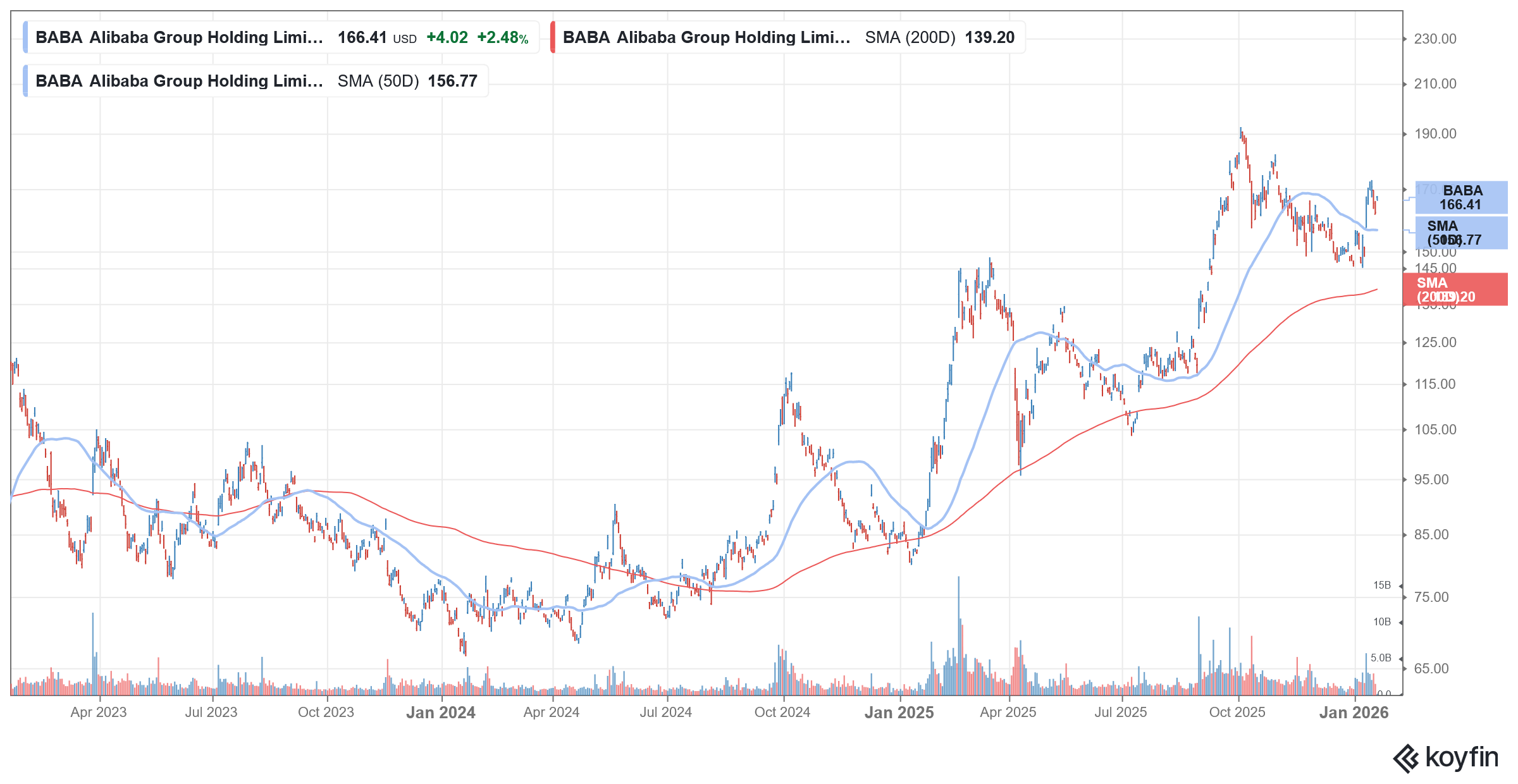
Alibaba is aggressively transforming itself from a dominant e-commerce player into an AI-first technology leader, focusing on a full-stack approach that encompasses the development of custom chips, powerful foundation models, and a suite of cloud services to deliver AI capabilities to enterprises and consumers.
This pivot is strategic, driven by the massive potential of Generative AI and the need for technological self-reliance amid geopolitical concerns and export restrictions on advanced foreign chips. The company has committed to a multi-billion-dollar investment over the next few years to execute this strategy.
During the fiscal Q2 2026 earnings call in November, Alibaba’s CEO Eddie Wu said that demand for AI products is “accelerating,” while adding, “Certainly, we see that customer demand for AI is and remains very strong. In fact, we are not even able to keep pace with the growth in customer demand.” He also touted the possibility of increasing the AI capex to meet customer demand.
Rising AI capex has made investors apprehensive
In the US as well, tech giants have raised their 2025 capex guidance, with Meta Platforms and Microsoft saying that the growth rate would be even higher next year. However, the spending spree is also raising concerns over a possible bubble, as some believe that tech companies won’t be able to generate enough returns to justify the billions of dollars that are being spent on building AI infrastructure.
Among others, it has developed an AI chip, which is a strategic response to US export restrictions that limit access to the most advanced AI chips, such as those from Nvidia. Alibaba, like other Chinese tech giants, is increasingly using its own chips for training AI models, a crucial step toward semiconductor independence.
Alibaba consolidated its AI offerings
In November 2025, Alibaba officially retired the Tongyi branding for its mobile applications, relaunching them under the Qwen banner. Previously, Alibaba’s AI efforts were fragmented across different apps and names. The rebrand consolidated these into a single “Qwen” interface, similar to how OpenAI uses ChatGPT as its primary consumer face. The relaunch introduced advanced AI agent capabilities. Instead of just answering questions, Qwen was designed to execute tasks like booking travel, managing food delivery, and navigating the Taobao marketplace on behalf of the user. The rebrand coincided with an upgraded version of the model, Qwen 2.5-Max, which benchmarked higher than many Western competitors in coding and logic.
The rebrand sparked an immediate surge in user adoption and investor confidence. Within just four days of the relaunch in November 2025, the Qwen app recorded over 10 million downloads, outpacing the initial growth trajectory of domestic rivals like DeepSeek.
Qwen downloads have surpassed 700 million
Qwen’s growth accelerated sharply in late 2025. In December 2025 alone, its single-month downloads exceeded the combined total of the next eight most popular models, including those from Meta, OpenAI, Mistral, and DeepSeek.
Alibaba Cloud’s Qwen family of AI models has reached a massive milestone, surpassing 700 million cumulative downloads according to global developer platform Hugging Face.
This achievement solidifies Qwen as the world’s most popular open-source AI ecosystem, marking a significant shift in the global AI landscape where Chinese models are now competing directly, and often leading, Western rivals like Meta’s Llama and OpenAI.
 Share
Share

Mohit Oberoi

Question & Answers (0)