




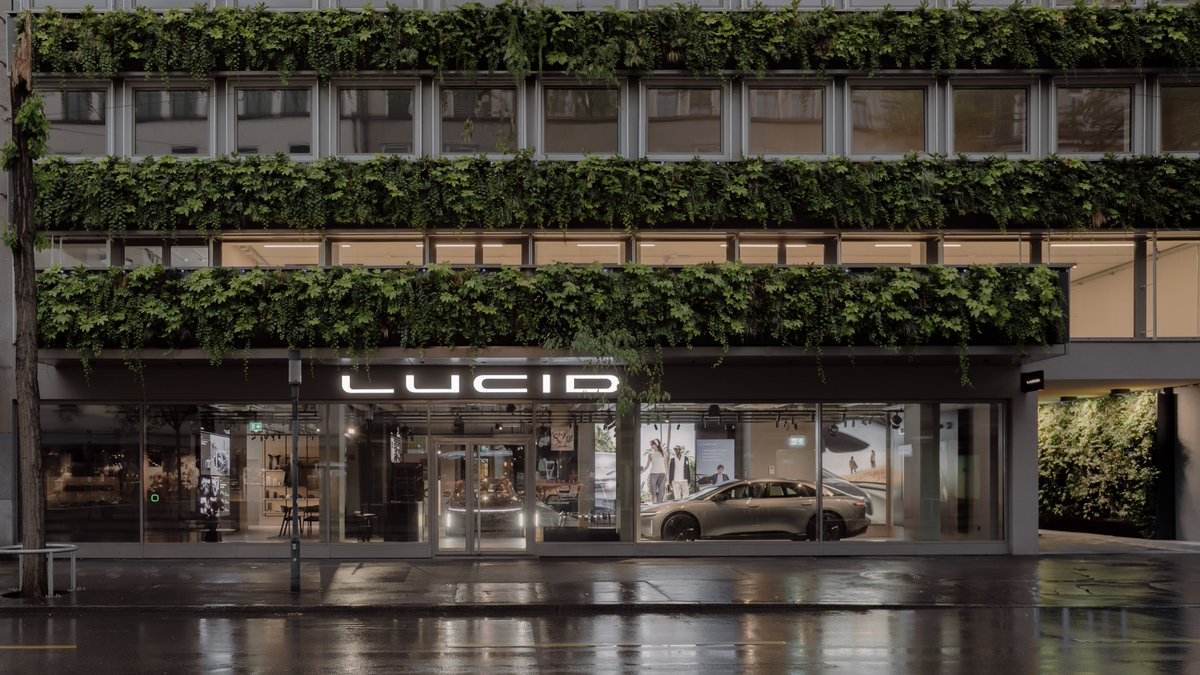
Lucid Group shares fell over 7% yesterday and hit a new record low. The company, which went public in 2021, has fallen in every year and now trades at a fraction of its all-time highs.
The recent sell-off has been driven by Lucid’s interim CEO, Marc Winterhoff’s, comments about Saudi Arabia’s Public Investment Fund (PIF) investments in the company. PIF is Lucid’s largest shareholder and has invested over $8 billion in the loss-making company. The comments seemed to suggest that Lucid would look at funding from other entities instead of PIF.
Lucid shares fall to record lows
Meanwhile, Lucid has said that Winterhoff’s comments were misinterpreted. “Marc never said that the PIF won’t continue to invest. Our expectation is exactly the opposite. There has been no change to our relationship with the PIF. This was taken out of context or misinterpreted. We have regularly attracted investment outside the PIF, including last year’s convertible bond, where we financed $1 billion with other investors, as we always have,” said the company in its clarification.
The PIF first invested in Lucid in 2018, long before the company went public via a special purpose acquisition company (SPAC) merger, providing essential seed funding that proved critical for the company’s survival and growth. It has since ploughed billions more into the company and has participated in all the stock sales that Lucid has done since it went public in 2021.
PIF has backed Lucid
During the Q3 earnings call, Lucid said that PIF has agreed to increase the existing delayed draw term loan credit facility from $750 million to approximately $2 billion. While PIF did not directly participate in Lucid’s convertible bond offering last year, it provided a literal backstop for the bonds.
Notably, the electric vehicle (EV) industry is quite capital-intensive, and startup players have had to raise capital regularly to fund their perennial cash burn. Lucid, like many high-growth EV makers, faces enormous capital expenditure demands. The consistent and structured investments from PIF reflect a deep, strategic partnership that goes beyond mere financial support, aligning directly with the Kingdom’s Vision 2030 goals for economic diversification.
The PIF, through its wholly-owned affiliate Ayar Third Investment Company, is Lucid’s majority shareholder, giving it significant influence over the company’s trajectory. This relationship is cemented by a series of massive capital infusions, structured to provide flexibility and long-term stability.
Lucid was the biggest SPAC merger when it went public
Lucid Motors was the biggest SPAC merger when it went public in 2021. It was among the most hyped SPAC mergers as it was touted as the “next Tesla.” Lucid Motors’ market cap reached almost $100 billion that year amid the euphoria towards EV shares.
However, that bubble has since burst, and many of the high-flying EV startups of that time have gone bankrupt. While Lucid remains in business, in part due to the backing from a cash-rich Saudi sovereign wealth fund, which has poured billions more into the company since it went public, the shares trade at a fraction of their all-time highs.
Last year, Lucid Motors completed a 10-for-1 reverse stock split, which helped it escape from the penny stock category, which it had been in with its share price below the threshold of $5.
The EV industry is going through turmoil
Meanwhile, the EV industry is battling a slowdown in sales, which has led to a price war with companies cutting prices to boost shipments. The price cuts have dented the margins and made things even more problematic for startup EV companies like Lucid Motors.
The price cuts have not helped lift shipments much, and even Tesla reported a yearly fall in deliveries last year, which was preceded by a decline in 2024.
Lucid’s performance has been somewhat better, even as it is coming from a much lower base. In Q4 2025, it produced a record 8,412 cars and delivered 5,345. In the full year, the company produced 18,378 vehicles, which was over twice what it did in 2024. Notably, the company was previously targeting a production of between 18,000 and 20,000 cars last year but toned down its guidance amid the slowdown.
LCID partnered with Aston Martin
Meanwhile, Lucid has been looking at other avenues to boost its revenues and, in 2023, partnered with Aston Martin to supply its cutting-edge electric vehicle powertrain and battery systems to power Aston Martin’s electrification strategy. Last year, Lucid Motors announced a partnership with autonomous tech company Nuro, Inc., and Uber Technologies to launch a next-generation premium global robotaxi program, exclusively for the Uber platform.
Uber partnered with Lucid for robotaxis
This strategic collaboration aims to deploy 20,000 or more Lucid vehicles, specifically the new Lucid Gravity SUV, equipped with Nuro’s Level 4 autonomous “Nuro Driver” system, over the next six years. The initiative is expected to first launch in a major US city in late 2026, marking a significant step towards widespread robotaxi adoption.
Under the terms of the agreement, Uber has invested $300 million in Lucid. This capital injection will support Lucid’s efforts to integrate Nuro’s hardware seamlessly into the Lucid Gravity on its assembly line, while Nuro will provide its advanced AI-powered self-driving software.
For Uber, this move solidifies its shift from “tech developer” to “platform partner.” Rather than spending billions to build its own self-driving software (having sold its ATG unit years ago), Uber is now the connective tissue between hardware makers like Lucid and software experts like Nuro. For Lucid, the deal provides a guaranteed high-volume buyer for the Gravity, helping the company scale during a period of shifting EV demand.
The trio unveiled the robotaxi at CES earlier this year, and commercial operations are set to begin later this year. Alphabet-backed Waymo and Tesla have a lead in the US robotaxi market even as the service is yet to take off in a big way.
 Share
Share

Mohit Oberoi

Question & Answers (0)